Every neighborhood had one.
The kid everyone looked up to. The one who seemed fearless. The one who always knew what to do.
Or at least acted like he did.
Ours was named Gary.
But nobody called him Gary.
To us, he was simply Spark.
Why Spark?
I have absolutely no idea.
I never asked. Nobody asked. Somewhere along the line, somebody called him Spark, and that was that.
When you’re ten years old, you don’t question nicknames. You just accept them like they’re part of the Constitution.
Spark was four years older than we were.
Four years doesn’t sound like much when you’re an adult. But when you’re eight years old, a twelve-year-old might as well have a driver’s license, a mortgage, and three kids of his own.
He was a giant.
He had his own crew. Older boys. Sunburned. Scrappy. Always dirty. Always building something.
Usually something that should never have been built.
Our group of younger kids followed them around like ducklings. We thought they knew everything.
Looking back, they knew almost nothing.
But confidence can be very convincing.
Go Get Spark
The amazing thing about Spark was that he somehow became our neighborhood protector.
Nobody voted. There wasn’t an election. He just quietly accepted the position.
If another kid from across town wandered into our neighborhood looking for trouble, there was only one response.
“Go get Spark.”
That was our version of calling 911.
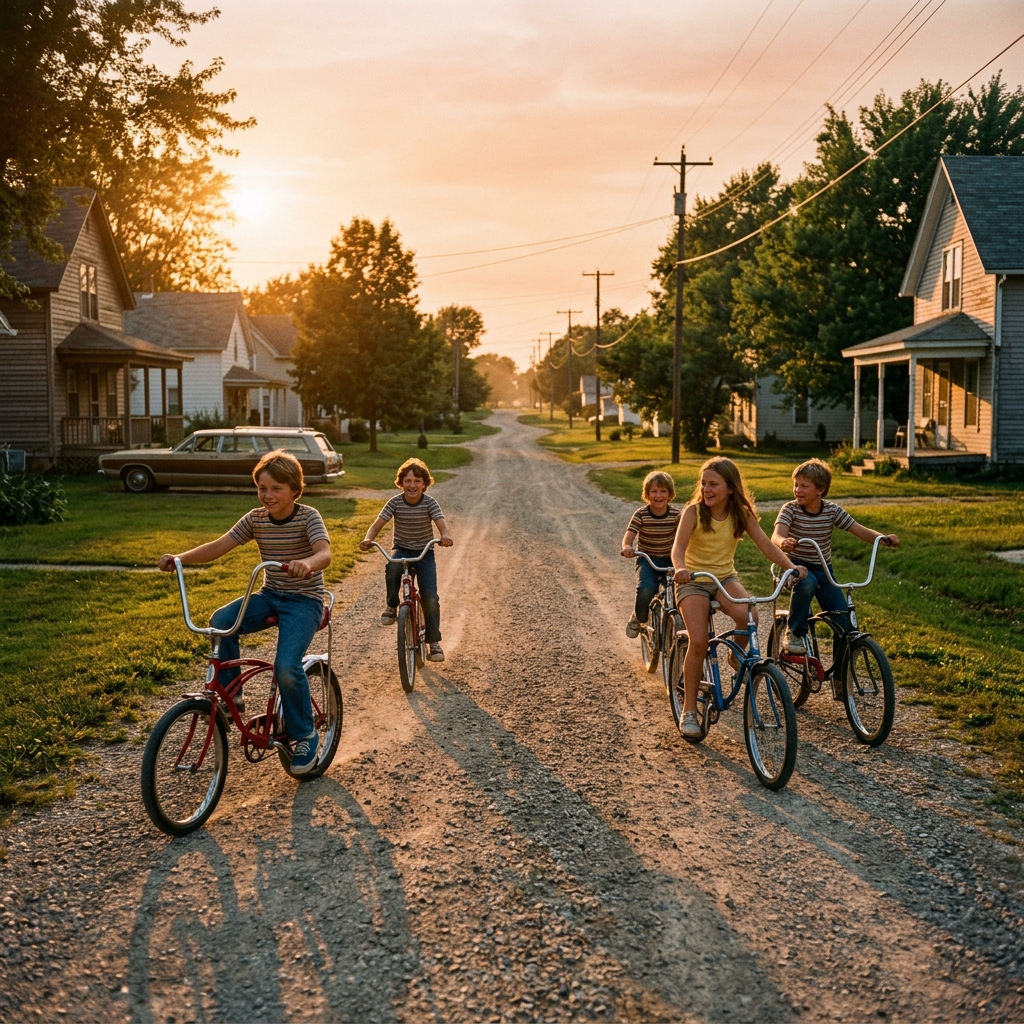
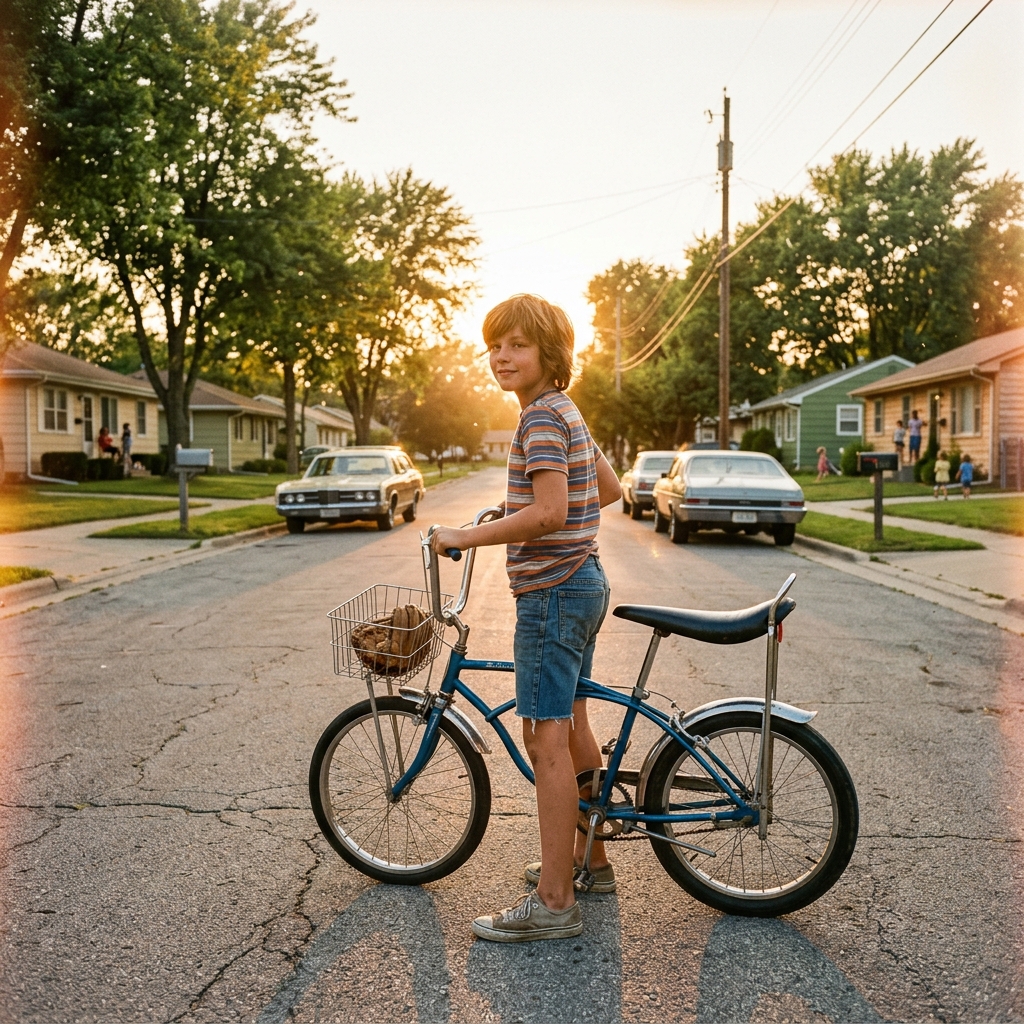
Within minutes, he’d appear. Usually shirtless. Sometimes barefoot. Almost always riding a bike that looked like it had survived three wars.
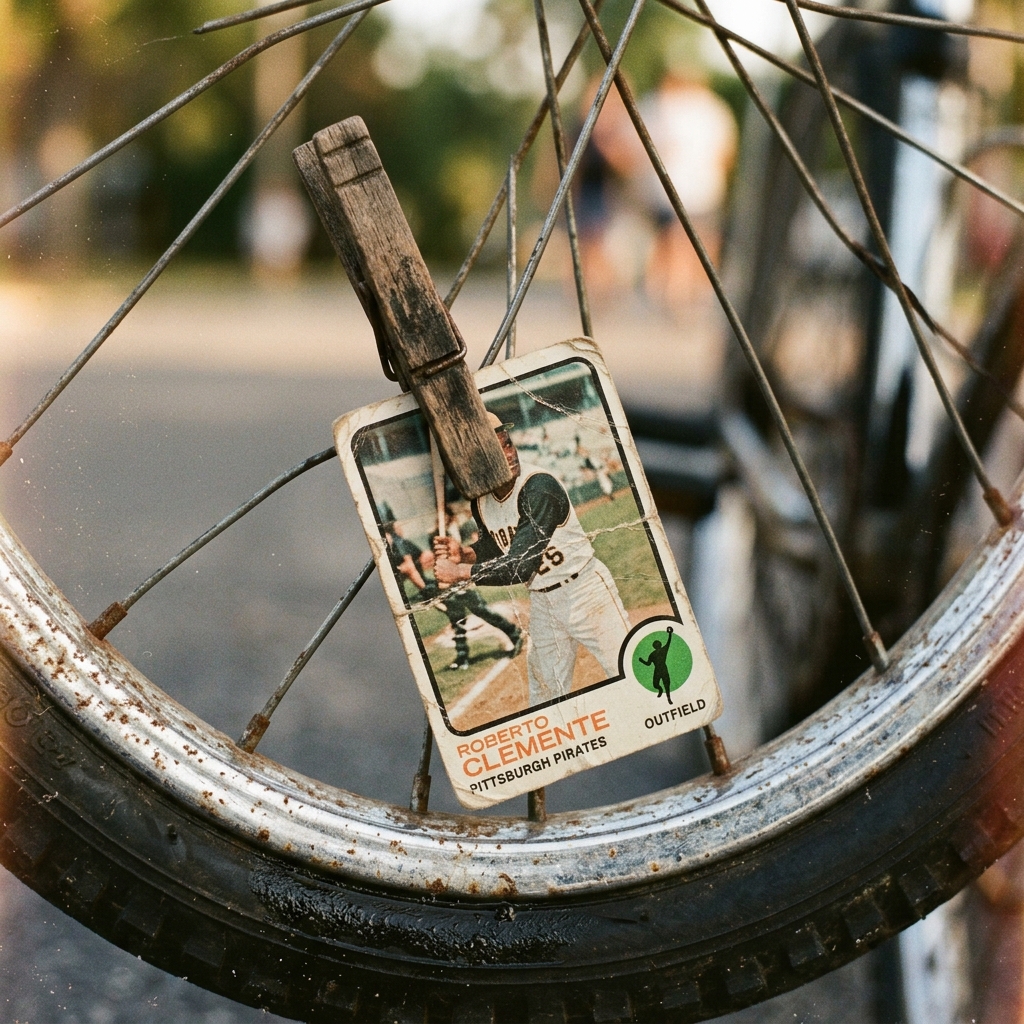
One pedal. Bent handlebars. A baseball card clipped to the spokes to make it sound like a motorcycle.
He’d roll up like Clint Eastwood entering town.
What happened next?
Honestly, I’m not completely sure. We usually stayed far enough away to avoid becoming collateral damage.
All we knew was that the problem disappeared.
To this day, I have no idea what Spark actually said to those kids. Maybe he negotiated a peaceful settlement. Maybe he gave them one of those legendary older-kid stares that somehow communicated, “Today’s probably not your day.”
Whatever it was, it worked.
Of course, neighborhood protection wasn’t free. Spark always had a mission.
Sometimes we’d be asked to help build a bike ramp. Calling it a “bike ramp” is generous. It was usually an old two-by-four balanced on a cinder block with all the engineering precision of a potato chip.
Other times we’d retrieve baseballs from places no adult wanted us climbing.
Occasionally we’d simply be told, “Watch this.”
Those two words should have terrified us.
They never did.
To be fair, our judgment wasn’t fully developed.
Neither was Spark’s.
King of the Bus Stop
One day, he decided we needed to determine who would become King of the Bus Stop.
I still have no idea what responsibilities came with the title. There wasn’t a crown. No salary. No retirement plan.
Apparently, the only qualification was surviving a fight.
Spark looked at me and said, “It’s your turn.”
Against who?
David Hernandez.
David boxed. I wrestled.
Looking back, this wasn’t exactly a balanced matchup.
The fight started. For about two minutes, David introduced my face to his fists. Repeatedly.
Spark watched thoughtfully from the sidelines.
Then he leaned over, and knowing I was a wrestler, he quietly offered what remains the greatest coaching advice I’ve ever received.
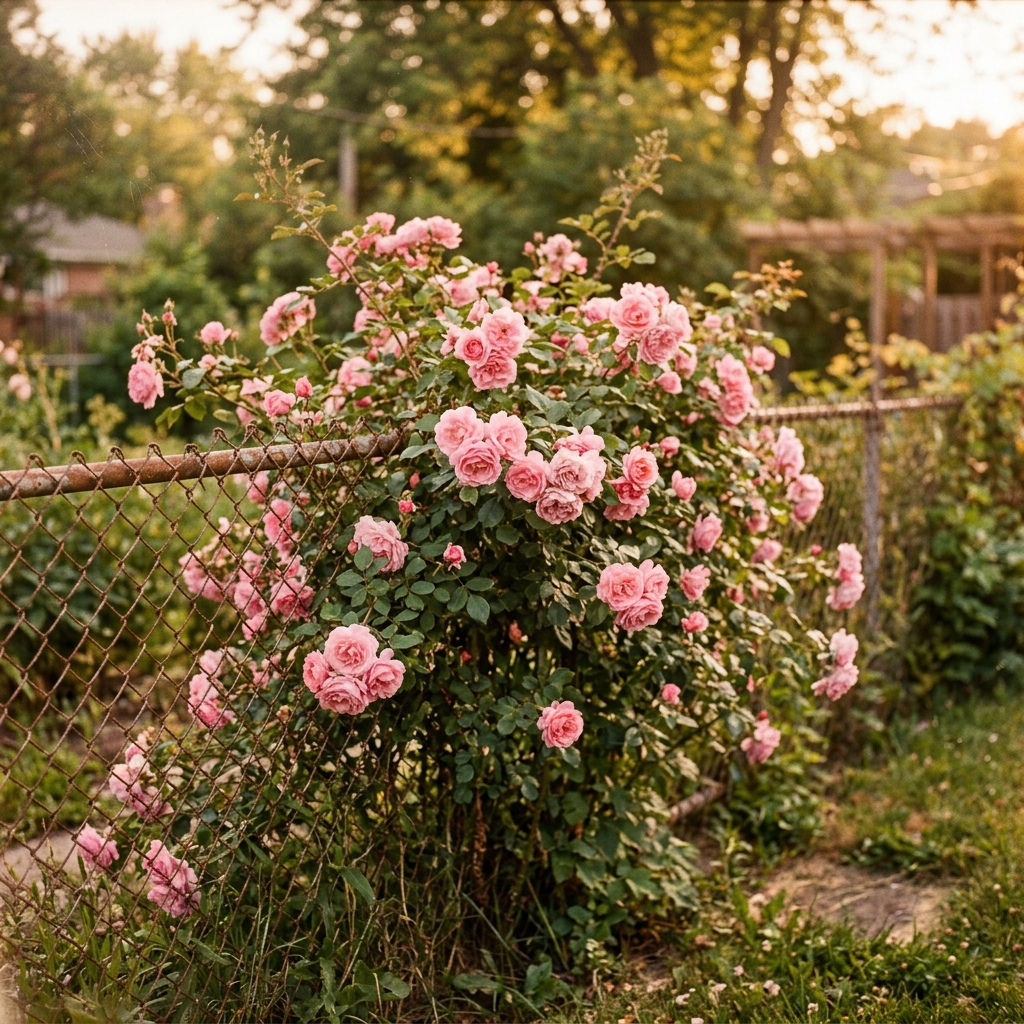
“Tackle him into the rose bushes.”
That was the entire game plan.
No strategy. No motivational speech.
Just rose bushes.
So I did.
I lowered my shoulder like a linebacker and drove both of us straight into the biggest rose bush in Twin Falls.
The fight ended immediately. Mostly because neither of us wanted to continue while covered in thorns.
We crawled out scratched from head to toe. David looked like he’d wrestled a cactus.
I probably looked worse.
Spark walked over. Slapped me on the back. And declared, “You’re king of the bus stop.”
Just like that. Promotion earned. Performance review complete.
Benefits package still unclear.
Every Team Still Needs a Spark
Looking back, none of it made much sense.
But somehow it made perfect sense.
We learned courage from kids who were barely old enough to shave. We learned loyalty without anyone giving speeches about it. We learned to stand up for one another.
And we learned that being the biggest kid in the neighborhood wasn’t nearly as important as being the one everyone knew would show up.
Years later, I’ve coached hundreds of athletes. I’ve worked with teachers, administrators, and leaders.
And I’ve realized something.
Every team still needs a Spark.
Not necessarily the loudest person. Not the one looking for attention.
The one who quietly makes everyone else feel a little safer.
Every neighborhood has one. Every locker room needs one. Every workplace hopes to find one.
And if you’re lucky enough to have one in your life, don’t forget to thank them.
Even if they occasionally solve problems by recommending a tackle into the nearest rose bush.
Next week, I’ll tell you about the day Spark decided to teach us how to hunt with his dad’s shotgun. Let’s just say it didn’t go exactly as planned.